5.0 min to readData and AI

Visions 2026: The shift from promise to performance with data and AI

armin-haller-contact
Armin HallerVP Data & AI
visions-2026-data-and-ai-adboe-1131194826-blog-hero

After more than 7 decades of research and development, in late 2022 AI finally became accessible to the general public with the launch of ChatGPT. It was an immediate sensation, but few would have predicted how quickly novelty would transition into serious commercial ambition. Or how soon the impetus would switch from chatbots to a new phase of AI focused on action.

In just over three years, people have moved from marveling at an AI that can write a poem to seeing the emergence of agents that can reason, debug complex code, and execute multi-stage workflows without human intervention. The gap between "cool experiment" and "enterprise value" is rapidly closing. 2026 is the year people at many organisations stop just talking to AI and start working alongside it.

Based on current market shifts and conversations I’m having with clients right now, here are four predictions for how organisations will translate AI promise into performance in 2026.

1. Maturing data and AI capabilities will unlock the "document-heavy" industries


For the last few years, the tech sector has absorbed much of the AI hype. But in 2026, a growing proportion of productivity gains will come from traditional, document-heavy industries like construction, logistics, utilities, and FMCG.

Historically, these sectors have struggled with digitisation because their data is trapped in unstructured formats: PDFs, invoices, contracts, and emails. In the past, building a data warehouse to make sense of this required an army of consultants and millions of dollars to manually map schema A to schema B.

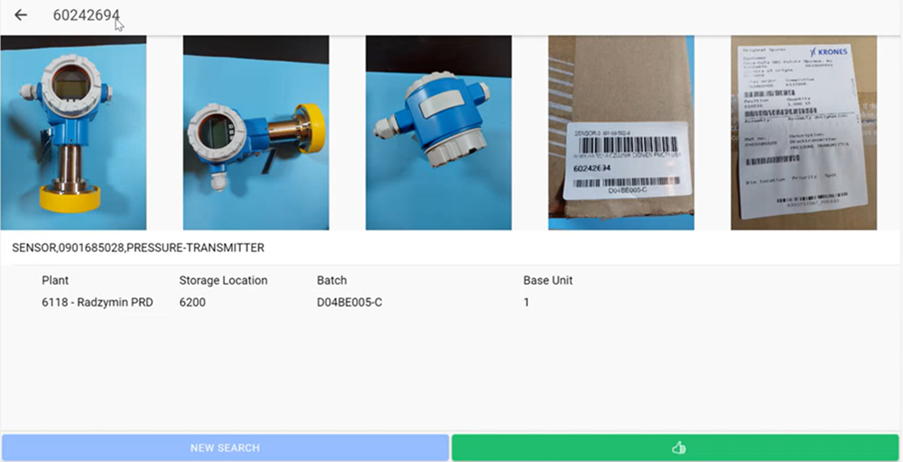
That barrier is gone. New AI-enabled data platforms, like Microsoft Fabric, have fundamentally changed the economics of data readiness. We are seeing AI models map complex data schemas in hours, not months. A utility company can now snap a photo of a 30-year-old broken part and have an AI instantly identify it against decades of unstructured specification documents. This isn’t just about "chatting" with data; it’s structuring the unstructured world so that traditional businesses can leapfrog into the digital age without the massive legacy IT debt.

With commercially available data solutions levelling the playing field, 2026 is the year when many smaller established businesses finally overcome complexity and cost to unlock the true value of their data.


How Crayon’s image recognition app helped Coca-Cola bottler identify 220,000 spare parts

In 2025, Crayon, now part of SoftwareOne, helped Coca Cola HBC improve production line efficiency by implementing machine learning and image recognition to rapidly identify damaged machine parts, check inventories and order replacements. Built with Azure ML, the solution is reducing maintenance downtime and costs at dozens of plants across Europe and Africa. Learn more in the full client story.

2. Agents will officially join the org chart

In 2026, AI is evolving from a productivity tool to a distinct organisational contributor. We are entering the era of the hybrid workforce, where a manager might assign a human to handle high-stakes client negotiations but task an agent to audit and process all invoices under $500.

With greater task responsibility falling on agents, managing risk and applying clear human accountability is paramount. We are therefore seeing the emergence of a new organisational design where human managers, supported by technology guardrails, are formally accountable for the AI agents that report-into them.

Last year we saw a significant step towards this with the arrival of digital identities for agents. Verifiable identities (like those via Microsoft Entra ID) mean agents can now possess their own credentials, audit logs, and permissions. They have digital footprints that mirror human employees, allowing them to authenticate and work securely across ecosystems.

This is another step in the shifting of the role of IT from "deploying software" towards "managing a workforce". With distinct identities, CIOs can apply standard employee lifecycle processes to AI: onboarding an agent with specific rights, monitoring its performance, and crucially, offboarding (deprovisioning) it instantly if it malfunctions or is no longer needed.

Whether an organisation starts laying this path this year or in the future, IAM standards for agents are likely to be crucial in scaling agentic workflows without losing control of the estate.

3. The "buy" paradigm will overtake "build"

Until recently, if you wanted an AI solution, you often had to build it. In 2026, the paradigm is shifting decisively towards "buy." I anticipate that 99% of enterprise use cases will be solved by off-the-shelf agents rather than custom builds.

We are witnessing the emergence of massive agent marketplaces, like those where individuals and businesses have bought software in the past, but for AI workforce capabilities. Whether you need an agent to process tender requests in Mandarin or handle tax compliance in Germany, you will buy a specialised agent that has already been perfected for that specific task.

Marketplace Primary focus Key differentiator Best for
AWS Marketplace Infrastructure & Backend Tools Deep compliance vetting (SOC2, HIPAA) & Private Cloud focus. Developers building secure, "headless" backend agents.
Microsoft 365 Copilot Agent Store Corporate Data & M365 Agents have Entra ID credentials and email addresses. Enterprises heavily invested in the Microsoft/Office stack.
Google Vertex AI Garden Multimodal Reasoning Agents can fact-check work using Google's search index. Complex research, coding, and video/image analysis.
Salesforce AppExchange Customer Experience (CX) & Sales Agents act immediately on live customer data. Sales, Support, and Commerce teams.
ServiceNow Store IT & Employee Workflows Connects distinct depts (e.g., IT + HR) seamlessly. IT Operations, HR onboarding, and Incident Response.

This creates a new role for partners and IT departments: curation. The potential proliferation of agents opens-up a new front in the battle with shadow IT, while increasing data security and compliance risks. Just as you wouldn't hire an employee without a background check, you won't deploy an agent without vetting it. The challenge ahead from 2026 may not be building the AI, but establishing guardrails to govern its sprawl, ensuring it is secure, effective, and cost-efficient.

4. AI cost optimisation will be a top priority

With AI workloads forecast to increase fivefold by 2029, in 2026 CIOs are increasing their focus on the "AI Triangle" of cost, performance, and accuracy.

While the latest frontier models are often much more capable (and resource intensive) than their predecessors, this doesn’t necessarily make them better for many business tasks. Does a job application screening bot need the reasoning power (and cost) of a PhD-level model? Probably not. A smaller, specialised model is likely "good enough" to filter 500 applicants down to 10 based on must-have criteria and with a human in the loop approver. Maximizing ROI therefore involves adopting capabilities that are fit for purpose rather than always selecting models with the most parametres.

This imperative to optimise AI is a driving force behind growing interest in Small Language Models (SLMs) that have lower computational demands and can in many cases be run on local hardware as “edge AI”. This not only significantly reduces cloud costs but also solves data sovereignty issues by keeping sensitive data on the device.

While these capabilities are ideal for work that is rules-based, repetitive, or sensitive, the raw power of the cloud will remain indispensable for complex and data heavy use cases as well as cases that require real-time responses at scale (many parallel users).

For CIOs, the goal isn’t to choose between cloud and edge, but to govern both with the same financial discipline. FinOps provides the operating model to do that: a cross-functional practise that builds real-time cost visibility and accountability into technology decisions, so teams can make explicit trade-offs between cost, performance, and accuracy as AI scales.

A final thought on jobs

There is a pervasive fear that this automation leads to job losses. I believe the opposite is true. We are not running out of work because we are still constrained by the human capacity to do the work we wish we could do.

By automating the "long tail" of low-value, high-volume transactions, we free humans to focus on the "head" of the curve: the complex decisions and human-to-human relationships that no algorithm can replace.

The successful organisation of 2026 won't be the one that automates everything, but the one that balances immediate value with strategic progress towards a hybrid workforce future.

blue digital waves

Make 2026 a breakthrough year

We’ll help you turn AI aspirations into action. Reach out to our experts to schedule an AI scoping session for you and your team.

Make 2026 a breakthrough year

We’ll help you turn AI aspirations into action. Reach out to our experts to schedule an AI scoping session for you and your team.

Author

armin-haller-contact

Armin Haller
VP Data & AI