SoftwareOne logo

Storm clouds or silver linings?

Storm clouds or silver linings?

How on-premise shifts, FinOps, GreenOps, and AI are shaking up IT cost management strategies.

Introduction

Cloud computing has revolutionised the IT landscape over the past twenty-plus years. Organisation have capitalised on the cloud for its scalability, flexibility, cost savings, and security benefits.

Alongside the positives, however, has come increased pressure on IT leaders to balance high performance with carefully controlled spend and environmental considerations, often across a combination of public and private clouds, and on-premise.

While the promise of cloud continues to deliver, we’re seeing a fascinating new trend take shape. Organisations today are allocating 37% of IT infrastructure spend towards shifting on-premise, in the wake of high-profile security breaches and changes in the relative total cost of ownership (TCO) between cloud and on-premise solutions.

IT teams must consider how best to keep data and assets secure, and save money on the one hand, while embracing innovation on the other. 60% are using AI for IT process automation, but 40% say AI is the top IT cost challenge they’ll face over the next three years.

In the face of this mounting complexity, FinOps has emerged as an essential discipline to help organisations control costs, improve accountability, balance sustainability and align IT investments with business outcomes. Our report reveals more professionals are now being certified in FinOps than in IT Asset Management.

The survey of more than 2,000 IT leaders around the world explores how organisations are using frameworks and strategies, including ITAM, FinOps, GreenOps, and SaaS, to measure, manage, and maximise IT investment, to ultimately increase efficiency and resilience now and into the future.

Methodology

The survey was conducted among 2,300 IT decision makers in companies with more than 200 employees across the US, EMEA (Austria, Germany, Switzerland, Netherlands, France, UK, Poland, South Africa, Norway, Finland, Spain, Sweden, Portugal, Serbia and Romania) and APAC (Singapore, Australia, Japan, Malaysia, Philippines, Indonesia and India).

The interviews were conducted online by Sapio Research in May and June 2025 using an email invitation and an online survey.


A woman sitting at a desk with a laptop.

Table of contents

  • Over half target cloud, FinOps and AI automation for better cost efficiency
  • Without appropriate governance, 40% fear AI cost challenge
  • Key vendors impact the predictability of current and planned IT spend
  • FinOps adoption is most mature in the US region
  • Organisations invest in certifications in pursuit of IT maturity
  • Organisations adopt FinOps practices to maximise cost savings
  • Half of organisations use third-party FinOps tools for an end-to-end view
  • More GreenOps matters – but rarely for cost reduction
  • Cloud migration is the most effective GreenOps initiative
  • One-third still manages cloud expenditure manually
  • Unexpected cost fluctuations trouble almost half
  • Security concerns drive 37% of infrastructure spend towards on-premise
  • Innovation and efficiency objectives drive cloud investment
  • 60% are using AI for IT process automation
  • 40% use FinOps to forecast for AI tools
  • Data and security challenges impact AI spend
  • Our report reveals three notable strategies organisations are adopting to increase efficiency and effectiveness.

C H A P T E R 0 1

Strategies for IT cost management

Examining where decision-makers are focusing their efforts to maximize IT investments, both today and their plans for the future.

What is FinOps?

According to the FinOps foundation, FinOps is an operational framework and cultural practice which maximises the business value of cloud and technology, enables timely data-driven decision making, and creates financial accountability through collaboration between engineering, finance, and business teams.

At its core, FinOps is a cultural practice, a way for teams to manage their cloud costs and where everyone takes ownership of their cloud usage supported by a central best-practices group, to enable faster product delivery, while at the same time gaining more financial control and predictability, in a sustainable way.

Over half target cloud, FinOps, and AI automation for better cost efficiency

Organisations spend around a third (31%) of their IT budgets on cloud [1] so it comes as no surprise that cloud cost optimisation and FinOps (57%) are seen as the biggest levers when it comes to maximising the value of IT spend. Heavy industry – manufacturing and distribution (66%) and energy, utilities, and oil and gas (62%) – are most likely to be prioritising this area to control IT spend.

Those organisations most likely to be focusing on AI-driven automation to lower spend are in tech- or consumer-focused industries such as marketing and sales (62%) IT (61%), and retail (61%).

A blurry image of people walking in a conference room.

Organisations with a fully integrated FinOps strategy are far more likely to say AI-driven automation has the greatest impact on IT cost optimisation (61%) than those with no strategy in place (39%) – most likely due to their superior ability to align tech investments with business outcomes.

Without appropriate governance, 40% fear AI cost challenge

Looking ahead, organisations recognise that AI has the potential to send IT costs soaring if not properly controlled, with 40% naming AI spend the top IT cost optimisation challenge of the next three years. What organisations want is full visibility of their IT spend and a good understanding of the top vendor licensing change to be in a better position to negotiate.

Rising software licensing costs (38%) also concern organisations. Software typically accounts for around a third of IT budgets, and the “long tail” of small, often overlooked, licences can contribute up to 20%[2] of that spend, representing an opportunity for those who can increase visibility of their IT estate and rationalise tools.

without-appropriate-governance

Key vendors impact the predictability of current and planned IT spend

Accurately planning IT spend is a persistent challenge for organisations worldwide. Microsoft, Google, and Amazon Web Services (AWS) are the top three vendors that impact budget predictability, and they are expected to continue posing significant challenges in this area over the next three to five years.


Business people discussing charts on interactive screens

C H A P T E R 0 2

FinOps: maturity, motivations and metrics

How Financial Operations is proliferating across organisations globally, the reasons why businesses are adopting the framework, and how they’re measuring success.

FinOps adoption is most mature in the US region

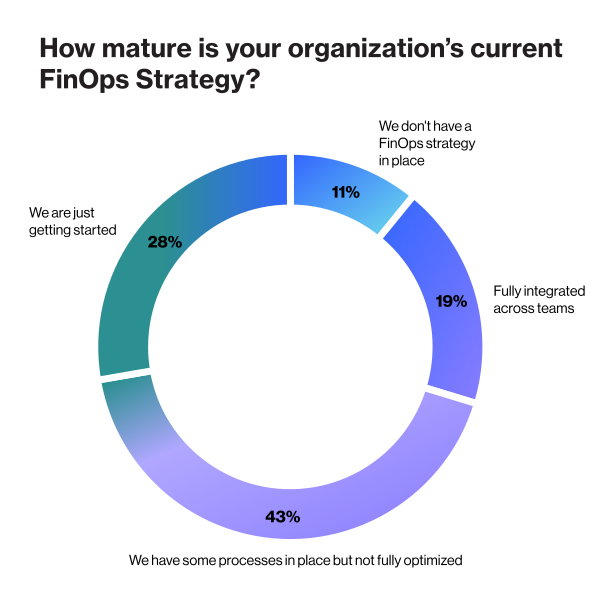
Despite the importance our survey respondents ascribe to FinOps for managing IT costs, only 19% have FinOps fully integrated as a cross-team strategy. Maturity varies by region, with this figure rising to more than a third of organisations (35%) in the US, higher than APAC (22%). In EMEA, only 14% have an integrated FinOps strategy currently, although the UK (27%) bucks the regional trend.

Given FinOps’s early roots in financial management, it is no surprise that organisations in the accounting and finance sectors have the most mature FinOps strategy of those surveyed. Larger organisations are also more advanced in this area – more than double those with 20,000+ employees (26%) have an integrated strategy compared to those with fewer than 1,000 (12%).

finops-adoption-is-most-mature

Organisations invest in certifications in pursuit of IT maturity

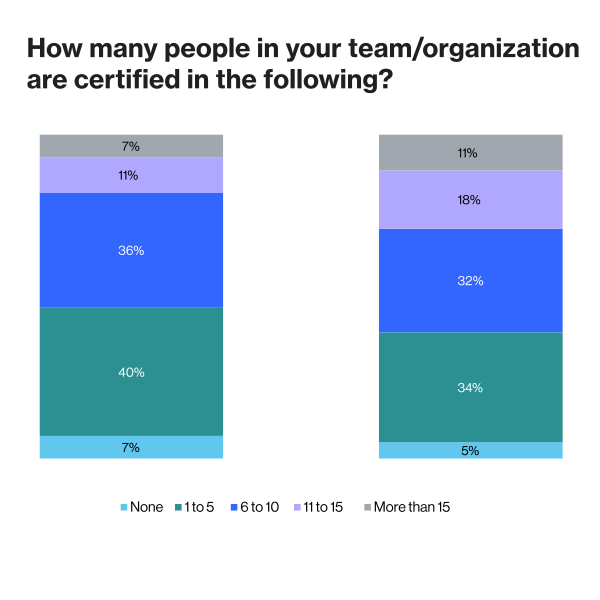
Given that most organisations are in the early stages of their FinOps journey, more organisations have certified FinOps professionals than certified ITAM (IT asset management) professionals. This confirms the convergence between ITAM and FinOps with this last domain becoming more relevant to all organisations.

organizations-invest

Organisations adopt FinOps practices to maximise cost control

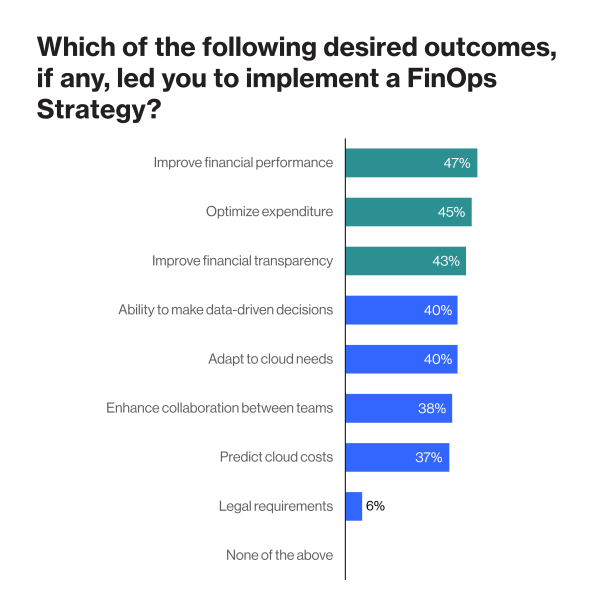
One of the benefits of FinOps is helping everyone across the organisation understand and take accountability for their own tech usage, thus helping to drive down costs. The top three reasons given for adopting a FinOps strategy relate to making expenditure easier to measure and control.

However, other than ‘legal requirements’ (6%), there is only a ten percentage point difference between all the reasons that organisations give for adopting FinOps, confirming that it has broader benefits outside of the merely financial.


organization- adopt-finOps

Half of organisations use third-party FinOps tools for end-to-end view

Two-thirds of organisations are using the built-in native cloud provider tools to assess spend and performance. Over half (51%) have invested in third-party FinOps tools, which allow for a holistic view across all their environments, and a further one-third (33%) have built their own internal tools. Still, 44% have limited visibility in their cloud spending, meaning that they need to rethink these tools and even partner with external service providers. A tool can’t be a silver bullet.


organization- adopt-finOps

Sector variations

The finance sector’s appetite for innovation compared to other industries is indicated in several areas of IT cost optimisation, including the use of automated tools (71% compared to an average of 62%). Conversely, organisations in the public sector, with their inherent risk aversion and reliance on legacy technology, are most likely to have no formal cost management process at all (19% – double the overall industry average of 8%). Overall, it is more than twice as likely (23%) to say it has no FinOps strategy in place than organisations in other sectors (11%).

C H A P T E R 0 3

GreenOps: sustainability strategies in IT

The role of GreenOps in IT cost optimisation and how organisations are meeting their sustainability objectives.


What is GreenOps?

GreenOps is an operating model that integrates technologies and business practices to maximise cloud efficiency while reducing environmental impact. It focuses on optimising resource usage through interventions such as better cooling, greener building materials, and smarter control systems, which are fundamental in data centres. While GreenOps and FinOps share common principles and can be integrated for a more comprehensive IT management approach, GreenOps can also exist as a standalone initiative, driving sustainability beyond financial optimisation.

GreenOps matters – but rarely for cost reduction

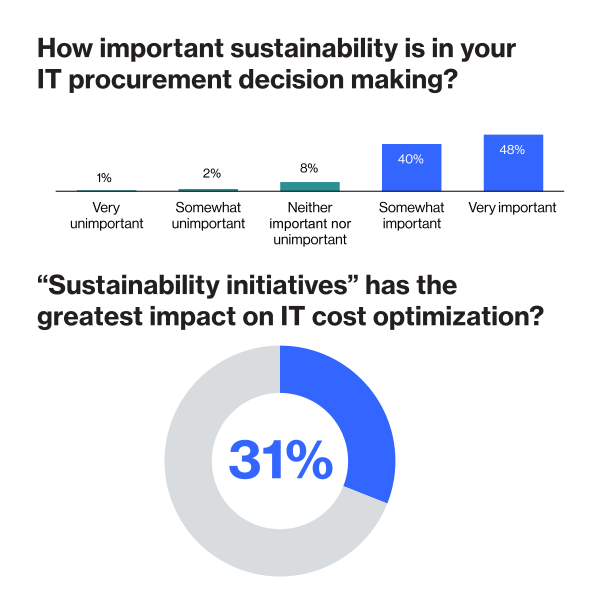
Alongside FinOps, organisations are implementing GreenOps where the primary motivation is sustainability rather than financial gain. 89% of respondents say sustainability is important in their IT procurement decision-making process – but fewer than one-third (31%) cite sustainability as one of the three greatest impacts on IT cost optimisation.

The more an organisation has embedded FinOps culture, the more likely they are to target more eco-friendly practices. Sustainability is far more important to those with the most mature FinOps strategy (99%) than those with no strategy in place (76%).


greenops-matters

Cloud migration is the most effective GreenOps initiative

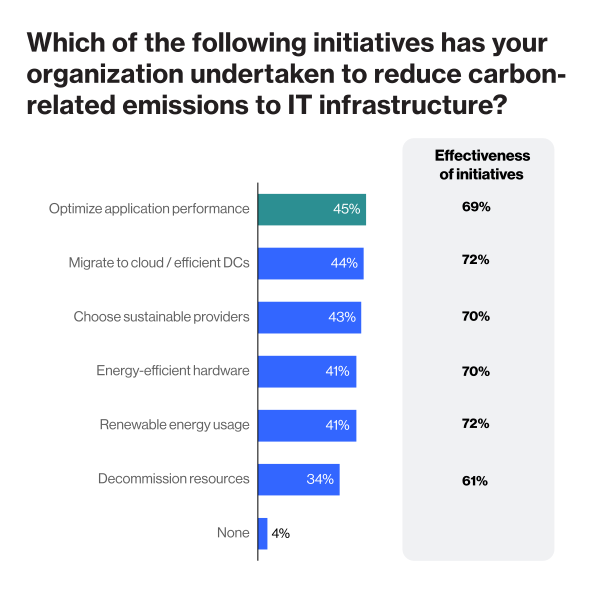
Many organizations are undertaking basic activities to reduce carbon-related emissions, but these are mainly limited to on-premise actions. The most popular initiative is optimising application performance (45%), while the two most effective tactics are migrating to the cloud or energy-efficient data centres (72%) and using renewable energy for IT operations (72%).

There is a correlation between FinOps and GreenOps maturity. Organisations with a fully integrated FinOps strategy are far more likely to be optimising application performance (58%) compared to those with no FinOps strategy (28%). We see a similar contrast for migrating to cloud or energy-efficient data centres (56% versus 28%) and opting for suppliers with sustainability credentials (56% versus 30%).

cloud-migration

C H A P T E R 0 4

Cloud and on-premise: trends and spend

How organisations are managing cloud costs, and the drivers influencing existing and planned infrastructure strategies across cloud and on-premise.

Unexpected cost fluctuations trouble almost half

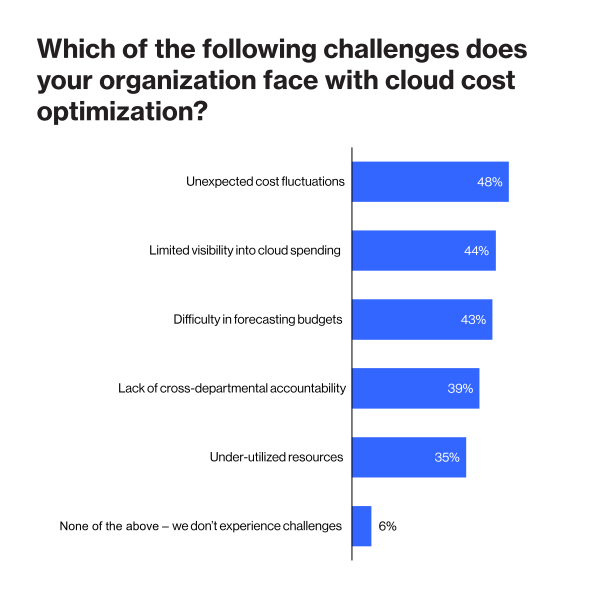
Organisations may be certifying FinOps professionals, using automated tracking tools, and deploying FinOps platforms, but the perennial issue of cloud cost optimisation is still causing headaches for nine in 10. Unexpected cost fluctuations (48%) and limited visibility of spend (44%) make tight control and management difficult.


unexpected-cost-fluctuations

Security concerns drive 37% of infrastructure spend towards on-premise

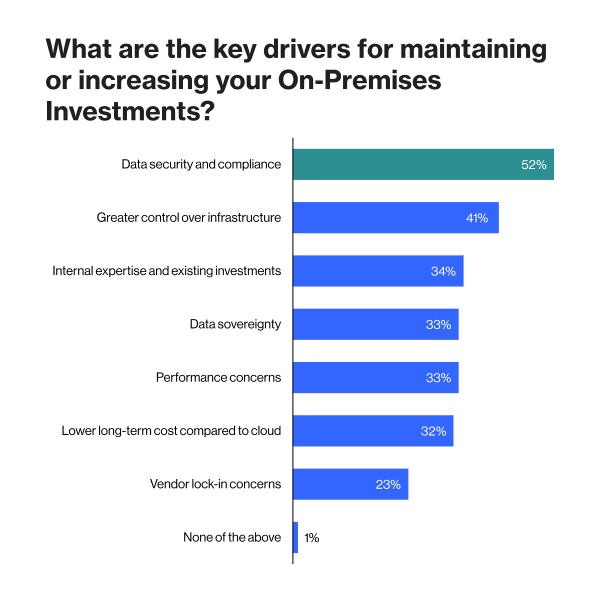
96% of organizations are considering shifting IT infrastructure spend towards on-premise, with an average 37% of budget earmarked. This figure rises to 40% of larger organisations (more than 5,000 employees), which typically have access to greater resources to support on-premise infrastructure.

Among the top reasons for both investing in existing on-premise infrastructure and diverting budget towards new on-premise operations are data security concerns.


security-concerns

Who’s prioritising on-premise?

US organisations have the most budget allocated to returning to followed by APAC (40%) and EMEA (35%).

Accounting and finance (41%), marketing and sales (41%), and architecture (40%) are the sectors dedicating the most budget here, while pharmaceuticals (32%), law, and professional services (32%) are among those spending the least.

Those in the C-suite say more budget (41%) is assigned to on-premise than those in managerial roles (36%), perhaps due to their responsibilities for the organisation's reputation management.

Innovation and efficiency objectives drive cloud investment

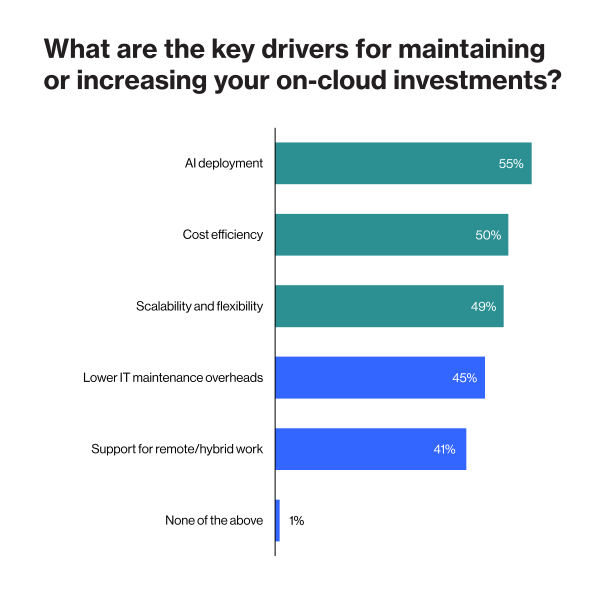
Organisations may be investing in on-premise, but cloud is still a key strategy for achieving key business objectives. On average, 41% of IT infrastructure budget is allocated to scaling up cloud capabilities, to facilitate AI deployment (55%), cost efficiency (50%), and flexibility (49%).


innovatio- and-efficiency

EMEA scales cloud more cautiously

Scaling cloud capacity is less of a priority for EMEA than other regions: organisations here are allocating 39% of IT infrastructure spend to this activity, compared to 43% in APAC and 47% in the US. One explanation for this could be GDPR or cloud sovereignty issues preventing EMEA firms from shifting workloads at the same rate as other regions.

C H A P T E R 0 5

The role of AI in IT cost optimisation

How organisations are harnessing AI for better return on IT investment – and what’s holding them back from doing more with this emerging technology.

60% are using AI for IT process automation

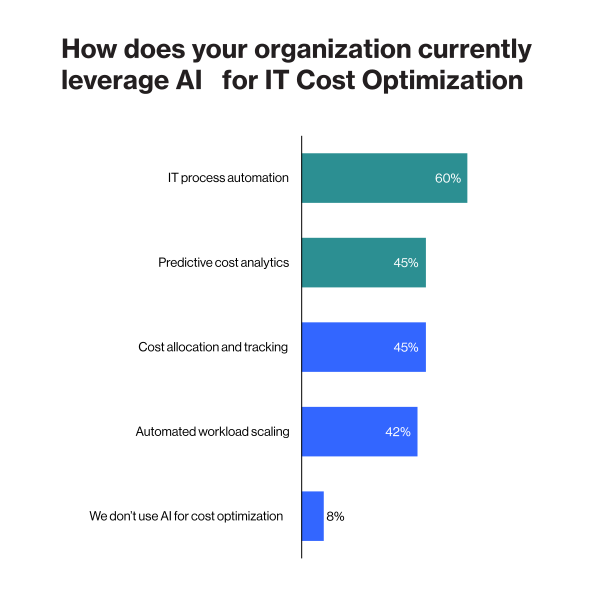
AI is a daily reality for organisations when it comes to IT cost optimisation. Nearly two-thirds (60%) are maximising IT return on investment with IT process automation, which is by far the most popular use case, ahead of cost analytics and allocation tasks (both 45%).

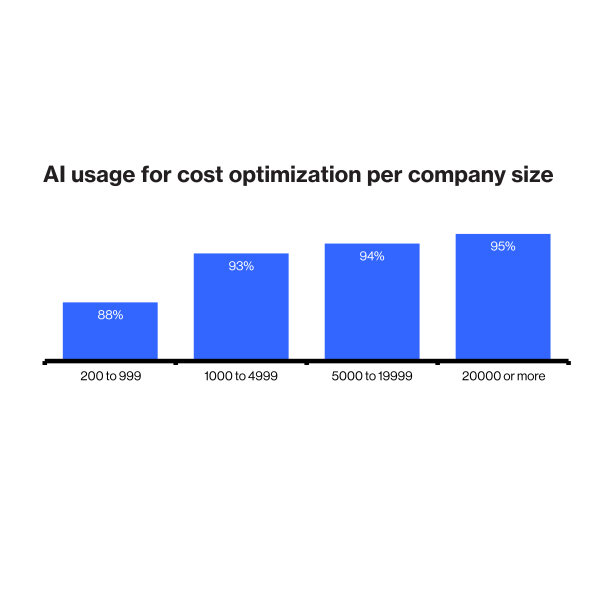
APAC organisations are the highest users of AI for cost optimisation, followed by those in the US (94%) and EMEA (90%).

The public sector is slowest to adopt this technology, with 26% saying they don’t use AI for cost optimisation, compared to the cross-industry average of 8%.

 :

 :

 :

60-are-using-ai-for-it-process-automation

The larger the organisation, the more likely AI is used.

60-are-using-ai-for-it-process-automation-part-2

40% use FinOps to forecast for AI tools

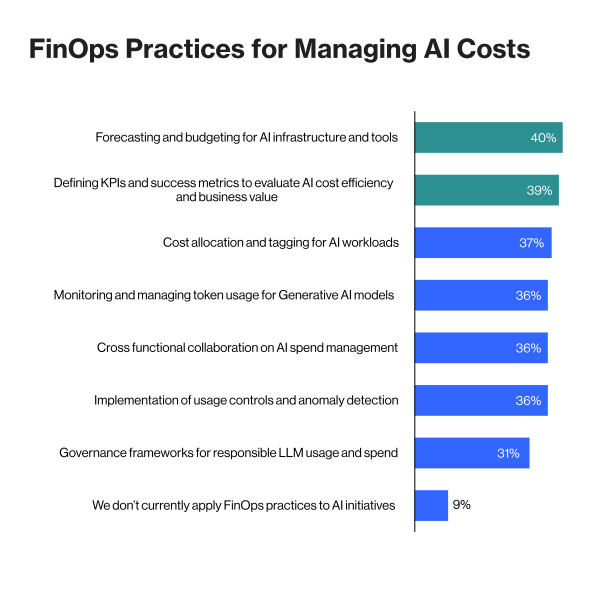
FinOps is helping 40% of organisations make better budgets for AI, and another 39% are using FinOps to define AI success metrics, but overall, respondents didn’t highlight one use case much more strongly than others. This suggests the market is still at the “experimentation” stage for FinOps for AI, and is open to guidance on best practices from external vendors and consultants.


finops-to-forecast-for-ai-tools

FinOps and AI governance

The introduction of regulations such as the EU AI Act will only increase the pressure on organisations to control its use. Not only that, but having acquired AI tools to gain competitive advantage, organisations are keen to understand how the technology is being used internally, how it can best be optimised (particularly when there is a level of duplication across tool capabilities), and how to control risk when many SaaS vendors have AI capabilities embedded that might access confidential data. FinOps has an important role to play here, not only from a spend management perspective but also in terms of AI governance.

Data and security challenges impact AI spend

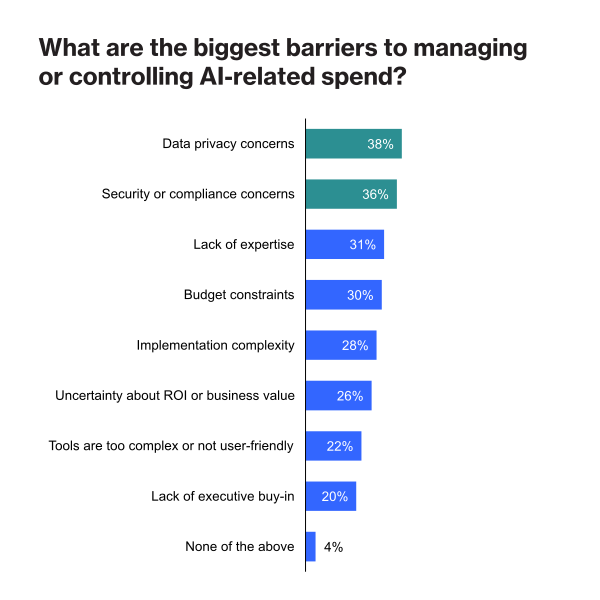
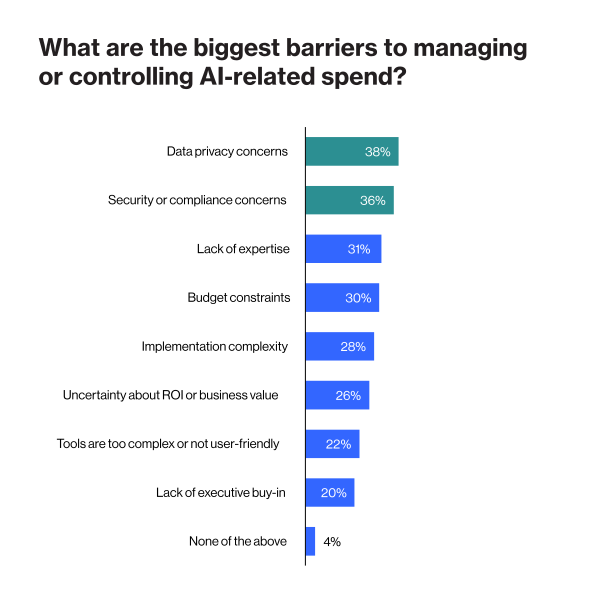
The top two reasons organizations struggle with AI spend are both related to security: data privacy concerns (38%) and security concerns (36%).

While organisations can see, and in many cases have begun to experience, the benefits of AI for IT cost management, getting budget sign-off can be tough. Finance teams are being asked to invest in strengthening the organisation's security, so introducing potential risk through emerging technologies can be a hard sell. In these instances, developing a FinOps and AI framework for governance could help provide reassurance and increased control.


data-and-security

C H A P T E R 0 6

Conclusion and recommendations

Now more than ever, business leaders must view their cost decisions as distinct actions to reduce spend, optimize performance and still increase investments in future growth.

IT cost management is, and will likely continue for many years, to be an existential challenge for organisations in today’s complex IT environment. Industry analyst Gartner® states[3].

Our report reveals three notable strategies organisations are adopting to increase efficiency and effectiveness.

[3] Gartner®: Cost Optimization Done Right — Even in a Volatile Economy. By Alexander Bant, 28 April 2025

  • journey icon

    FinOps: from framework to culture

    Most are on a journey to FinOps rollout, but those who have moved from ad hoc application to embedded strategy are reaping the most rewards in terms of IT cost management. And while most say their GreenOps initiatives aren’t cost-driven, more sustainable IT practices embedded in the culture will naturally also lower costs through better use of CO2, energy, water, and IT resources.

  • web analytics icon

    Finding the AI sweet spot

    When a technology is as transformational as AI, the full benefits can only be realised when implementation is considered holistically. New systems must integrate with legacy technology, variable in-house technical skills, existing policies, and evolving regulations. Against this backdrop, those who are orchestrating AI operations across the organisation, with the support of FinOps, stand to gain the . Equally, to increase the efficiency and cost management of FinOps programs themselves, the use of AI will be crucial.

  • remote icon

    Balancing cloud and on-premise

    There’s no one-size-fits-all, fixed approach to IT workloads, as the new trend for shifting some back on-premise shows. Rather, the ability to gain a holistic view, implement measurable metrics, and respond to changing circumstances with agility will set the leaders . The on-premise shift is likely to continue, driven by concerns around data sovereignty, compliance, security, and cost increases – plus the desire to avoid cloud vendor lock-in.

Take control of the known to mitigate against the unknown

Among the top worries for organisations worldwide is preparing for the unknown. Lack of governance controlling spend, cloud cost unpredictability, and rising cloud/ software (also driven by AI adoption) costs unpredictability were among the top challenges for IT cost optimisation over the next years.

And while tools are available to help organisations manage more immediate IT costs, a talent shortage, unfamiliarity with the market, or confusion about how to integrate with existing systems can hamper adoption.

Expert guidance and ongoing optimisation can help organisations get more out of their investments in tools and technology. A trusted partner like SoftwareOne (formerly Crayon) can help lower the known costs, better forecast upcoming budget requirements, and support organisations to get in better shape to respond to the unpredictable and unknown variables of IT management today.

White and gray blocks forming a pattern

Connect with our experts

Share a few details about your business challenge, and we’ll get right back to you.

Connect with our experts

Share a few details about your business challenge, and we’ll get right back to you.